



Description
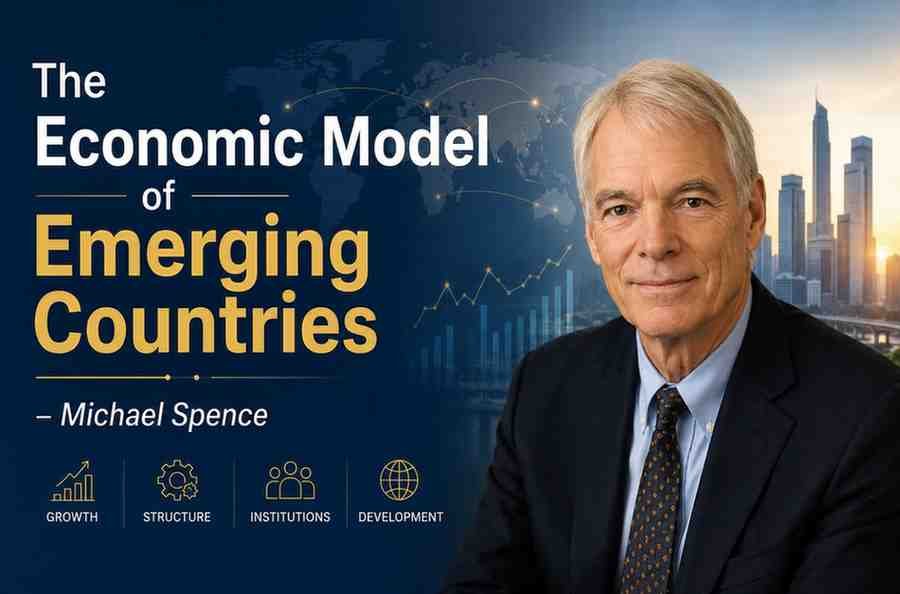
Understanding how emerging economies grow and transform is essential for students, investors, policymakers, and business professionals. The “The Economic Model of Emerging Countries – Michael Spence” course on Udemy explores the economic principles that drive the rapid development of countries such as China, India, Brazil, and other fast-growing economies.
This course is inspired by the work of Michael Spence, a Nobel Prize–winning economist known for his research on economic growth, global development, and market dynamics. Through structured lectures and real-world insights, the course explains the mechanisms behind economic expansion in emerging markets and how these economies integrate into the global system.
What You Will Learn
This course provides an analytical framework for understanding how emerging countries achieve rapid economic growth and structural transformation.
Understanding the Concept of Emerging Economies
The course begins by defining emerging markets and explaining what distinguishes them from developed economies.
Key topics include:
- Characteristics of emerging economies
- Differences between developing and developed countries
- Economic growth patterns in emerging markets
- Structural transformation of economies
Students gain a clear understanding of why some countries experience rapid development while others struggle to grow.
The Michael Spence Growth Model
A major focus of the course is the economic growth model associated with Michael Spence, which explains how certain countries achieve sustained high growth rates.
Important elements of this model include:
- Export-led growth strategies
- Industrialization and manufacturing expansion
- Productivity improvements
- Government policy support for economic growth
This framework helps explain the success stories of several high-growth economies over the past few decades.
The Role of Global Trade in Economic Growth
International trade plays a crucial role in the development of emerging economies. The course examines how global markets influence economic growth.
Topics covered include:
- Export-oriented industrialization
- Global supply chains
- Trade integration with developed economies
- Foreign investment and capital flows
These insights show how participation in global trade can accelerate economic development.
Urbanization and Structural Transformation
Another key factor in economic development is the shift from agricultural economies to industrial and service-based economies.
The course explains:
- Urbanization and labor migration
- Industrial growth in cities
- Productivity improvements through structural change
- Development of modern industries
This transformation is a critical stage in the economic evolution of emerging markets.
Government Policies and Economic Development
Government policies often play a central role in shaping the growth trajectory of emerging economies.
Students learn about:
- Industrial policies
- Infrastructure investment
- Education and human capital development
- Regulatory frameworks that support economic growth
These lessons demonstrate how policy decisions can accelerate or hinder economic progress.
Challenges Faced by Emerging Economies
While emerging markets present significant opportunities, they also face numerous economic challenges.
The course explores issues such as:
- Income inequality
- Infrastructure gaps
- Financial market instability
- Environmental sustainability
- Political and institutional challenges
Understanding these risks helps learners evaluate the long-term sustainability of economic growth.
Course Structure
The course is structured into multiple modules that progressively build knowledge about economic development.
Major sections include:
- Introduction to emerging economies
- Foundations of economic growth
- The Michael Spence growth framework
- Role of exports and globalization
- Structural transformation and urbanization
- Government policy and economic development
- Challenges facing emerging markets
Each module presents theoretical concepts along with real-world economic examples.
Instructor Background
The course is taught by Evrim Kanbur, an experienced economics educator with professional experience in business consulting and international economic analysis.
Her teaching approach focuses on simplifying complex economic concepts and connecting them with real-world examples from global markets. This makes the course accessible to learners from different academic and professional backgrounds.
Who Should Take This Course?
This course is ideal for learners who want to understand global economic development and the rise of emerging markets.
Recommended for:
- Economics and business students
- Investors interested in emerging markets
- Entrepreneurs expanding into global markets
- Policy analysts and researchers
- Anyone interested in global economic trends
It is particularly useful for individuals who want to understand how countries achieve rapid economic growth and development.
Key Benefits of the Course
Clear Explanation of Economic Growth Models
The course breaks down complex development theories into easy-to-understand lessons.
Global Economic Perspective
Learners gain insights into how emerging markets interact with global economic systems.
Real-World Case Studies
Examples from rapidly developing countries illustrate how economic theories work in practice.
Strong Conceptual Foundation
The course builds a solid understanding of development economics and international trade.
Potential Limitations
While the course offers valuable insights into emerging economies, there are some limitations to consider:
- Advanced econometric analysis is limited
- The course focuses more on conceptual frameworks than mathematical models
- Learners seeking deep academic research may need additional resources
However, for a practical introduction to development economics, the course provides strong value.
Skills You Will Gain
After completing this course, learners will be able to:
- Understand economic growth patterns in emerging countries
- Analyze export-led development strategies
- Evaluate government policies for economic development
- Identify opportunities and risks in emerging markets
- Interpret global economic trends and transformations
These skills are valuable for careers in economics, international business, finance, and policy analysis.
Final Verdict
The “The Economic Model of Emerging Countries – Michael Spence” course provides an insightful introduction to how emerging economies grow and integrate into the global marketplace. By combining economic theory with real-world examples, the course helps learners understand the key drivers behind the rapid development of countries across Asia, Latin America, and other regions.