




Description
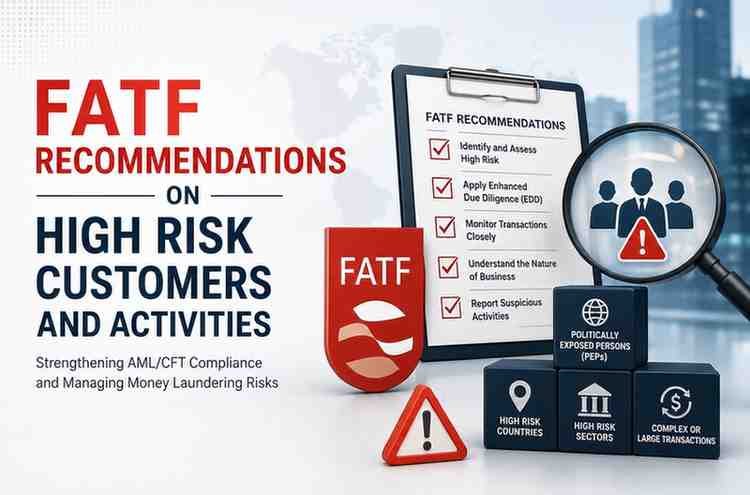
Financial crimes such as money laundering and terrorist financing continue to pose serious risks to global financial systems. To address these threats, the Financial Action Task Force (FATF) has developed international standards that help financial institutions identify high-risk customers, suspicious transactions, and illegal financial activities.
The “FATF Recommendations on High Risk Customers and Activities” course on Udemy focuses on understanding these international AML standards and how organizations apply them to identify and manage financial crime risks.
Course Overview
The FATF Recommendations on High Risk Customers and Activities course introduces learners to the global anti-money laundering standards established by the Financial Action Task Force.
Financial institutions must follow these recommendations to identify high-risk customers, conduct enhanced due diligence, and implement compliance controls that prevent financial crime.
This course explains how FATF guidelines influence AML policies within banks, fintech companies, and financial service providers. It also explores how organizations evaluate customer risk and monitor financial activities associated with potential money laundering.
The course is structured in a way that makes complex regulatory concepts easy to understand, making it suitable for beginners as well as professionals working in compliance roles.
What You Will Learn
By completing this course, learners gain a strong understanding of how FATF recommendations guide AML compliance programs worldwide.
Key learning outcomes include:
- Understanding the role of FATF in global financial regulation
- Learning about FATF recommendations related to high-risk customers
- Identifying high-risk financial activities and transactions
- Understanding risk-based approaches to AML compliance
- Learning how institutions apply Enhanced Due Diligence (EDD)
- Understanding the concept of Politically Exposed Persons (PEPs)
- Recognizing red flags associated with high-risk clients
- Understanding the importance of monitoring high-risk jurisdictions
These concepts are essential for professionals involved in financial compliance and risk management.
Course Curriculum Breakdown
The course is organized into several modules that explain FATF standards and their practical application in financial institutions.
Introduction to FATF and Global AML Standards
The course begins by introducing the Financial Action Task Force and its role in setting international standards for combating money laundering and terrorist financing.
Students learn how FATF recommendations influence national regulations and compliance programs across the financial industry.
Understanding High-Risk Customers
One of the central topics of the course is identifying customers who present a higher risk of financial crime.
This module explains how financial institutions classify customers based on risk profiles, including factors such as:
- Customer occupation
- Geographic location
- Transaction behavior
- Business activities
Understanding these risk factors helps institutions apply stronger monitoring procedures.
Politically Exposed Persons (PEPs)
Politically exposed persons are individuals who hold prominent public positions and may pose higher financial crime risks.
This section explains how financial institutions identify PEPs and apply additional monitoring controls when dealing with such clients.
Learners understand why enhanced due diligence is necessary when working with high-profile individuals.
High-Risk Jurisdictions and Financial Activities
Certain countries and regions are considered higher risk due to weak regulatory controls or increased financial crime activity.
This module explains how financial institutions monitor transactions related to high-risk jurisdictions and implement stricter compliance measures.
Students also learn how unusual financial activities can indicate potential money laundering attempts.
Enhanced Due Diligence (EDD) Procedures
Enhanced Due Diligence is a critical compliance process applied to high-risk customers.
In this section, learners explore how institutions gather additional information, verify financial sources, and conduct ongoing monitoring for high-risk clients.
EDD procedures help organizations reduce exposure to financial crime and regulatory penalties.
Who Should Take This Course
The course is ideal for individuals interested in AML compliance, financial risk management, and regulatory frameworks.
It is particularly useful for:
- AML analysts
- Compliance officers
- Banking professionals
- Risk management professionals
- Financial crime investigators
- Auditors and consultants
- Finance and accounting students
- Professionals working in fintech and financial services
Even beginners with no prior knowledge of AML regulations can benefit from this course.
Skills You Will Gain
After completing the course, learners will develop valuable compliance and risk management skills.
These include:
- FATF regulatory knowledge
- High-risk customer identification
- AML risk assessment techniques
- Enhanced due diligence procedures
- Monitoring high-risk transactions
- Financial crime prevention strategies
These skills are highly relevant in industries such as banking, fintech, consulting, and regulatory compliance.
Benefits of the Course
The course simplifies complex international regulatory standards and explains them in a practical and easy-to-understand format.
Major benefits include:
- Clear explanation of FATF recommendations
- Practical understanding of high-risk customer identification
- Useful knowledge for AML compliance careers
- Structured and beginner-friendly lessons
- Flexible self-paced learning
Because FATF recommendations form the basis of global AML regulations, understanding these guidelines is valuable for anyone working in financial compliance.
Pros of the Course
- Covers important FATF AML standards
- Explains high-risk customer identification clearly
- Beginner-friendly structure
- Useful for compliance and banking careers
- Flexible online learning format
Possible Limitations
The course mainly focuses on conceptual understanding of FATF recommendations. Learners seeking deeper regulatory frameworks, advanced AML analytics, or compliance technology tools may need additional specialized training.
However, for beginners and professionals wanting to understand international AML standards, the course provides a strong foundation.
Is This Course Worth Taking?
Yes. The FATF Recommendations on High Risk Customers and Activities course is a valuable learning resource for anyone interested in understanding global AML compliance standards.
If you plan to work in banking, fintech, compliance, auditing, or financial risk management, knowledge of FATF recommendations is extremely important. These standards guide how financial institutions manage high-risk customers and prevent money laundering.
This course provides a clear and practical introduction to these global regulatory principles, making it a worthwhile option for beginners and professionals looking to strengthen their AML knowledge.

Reviews
There are no reviews yet.