




Description
Financial crimes such as money laundering and terrorist financing pose serious threats to global financial systems. As a result, organizations across banking, fintech, and financial services must implement strict compliance frameworks to monitor transactions and prevent illegal financial activities.
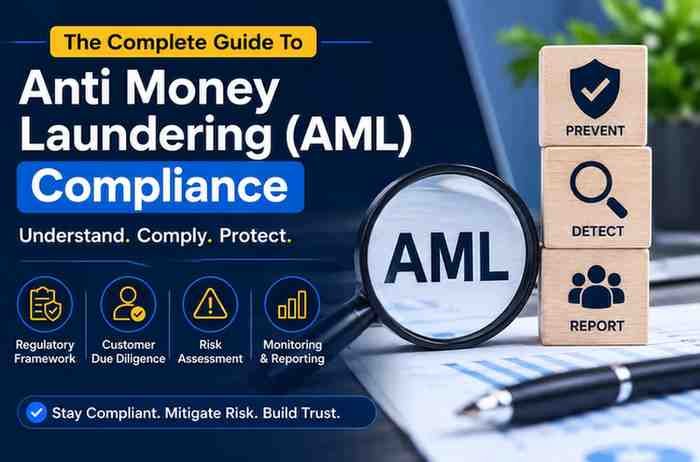
The “The Complete Guide To Anti Money Laundering (AML) Compliance” course on Udemy is designed to help learners understand the fundamentals of AML regulations, compliance procedures, and risk-based monitoring systems used by financial institutions.
This review provides a complete overview of the course content, learning outcomes, benefits, and whether it is worth enrolling in.
Course Overview
The Complete Guide To Anti Money Laundering (AML) Compliance is a beginner-friendly course that introduces the key principles behind anti-money laundering regulations and compliance practices.
The course explains how organizations detect suspicious financial activity, apply Know Your Customer (KYC) procedures, and design effective AML compliance programs. It also discusses the responsibilities of AML compliance officers and the importance of monitoring financial transactions to prevent illicit activity.
The training is structured using short lessons and practical scenarios that help learners understand how AML frameworks operate in real business environments.
What You Will Learn
After completing this course, students gain a clear understanding of AML compliance fundamentals and financial crime prevention strategies.
Major learning outcomes include:
- Understanding the basic concept of money laundering
- Learning the three stages of money laundering
- Identifying money laundering threats and risks
- Applying Know Your Customer (KYC) procedures
- Conducting Customer Due Diligence (CDD)
- Implementing Enhanced Due Diligence (EDD)
- Recognizing suspicious transaction indicators
- Understanding transaction monitoring systems
- Building an AML compliance program
These concepts help organizations identify potential financial crimes and maintain regulatory compliance.
Course Curriculum Breakdown
The course is organized into several focused modules that gradually build AML knowledge.
1. Introduction to Anti-Money Laundering
This section introduces the concept of money laundering and explains why AML compliance is critical for businesses and financial institutions.
Students also learn about the duties and responsibilities of AML compliance officers.
2. Risk-Based Approach and AML Risk Assessment
This module explains how organizations identify and evaluate financial crime risks using a risk-based approach.
Learners understand how companies assess customer risk levels and apply appropriate monitoring controls.
3. Customer Due Diligence (CDD)
Customer Due Diligence is a fundamental requirement for financial compliance.
In this section, students learn:
- Know Your Customer (KYC) verification
- Standard and simplified due diligence
- Enhanced due diligence for high-risk clients
- Identifying politically exposed persons (PEPs)
These procedures help institutions verify the identity and financial behavior of customers.
4. Suspicious Transaction Monitoring
One of the most important parts of AML compliance is identifying suspicious activity.
This module teaches learners how to:
- Detect red-flag indicators
- Monitor unusual financial transactions
- Understand transaction monitoring alerts
- Evaluate suspicious activity reports
These monitoring systems help organizations detect illegal financial activity early.
5. AML Training, Record Keeping, and Compliance Review
The final modules explain how companies maintain effective AML systems through internal training and documentation.
Topics include:
- AML training programs for employees
- Record-keeping requirements
- Independent compliance audits
- Ongoing AML compliance reviews
Maintaining proper documentation ensures organizations meet regulatory expectations.
Course Features
Some notable features of the course include:
- Short and easy-to-understand lessons
- Practical examples and simulation scenarios
- Final assessment to test knowledge
- Beginner-friendly explanations
- Self-paced learning format
The course contains multiple lectures organized into several sections covering AML fundamentals and compliance processes.
Who Should Take This Course
This course is suitable for individuals who want to build foundational knowledge of AML compliance.
It is especially useful for:
- Compliance officers
- Banking professionals
- Financial analysts
- Risk management professionals
- Business owners dealing with financial regulations
- Accounting and finance students
- Anyone interested in financial crime prevention
Even learners with no previous knowledge of AML can easily follow the course.
Skills You Will Gain
By completing this course, students can develop valuable compliance and financial risk management skills, including:
- AML risk assessment
- KYC verification procedures
- Customer due diligence
- Suspicious activity detection
- Transaction monitoring
- Compliance program development
These skills are widely used in industries such as banking, fintech, consulting, auditing, and regulatory compliance.
Pros of the Course
- Beginner-friendly explanations of AML concepts
- Practical scenarios that simulate real compliance situations
- Covers KYC, CDD, and suspicious transaction monitoring
- Useful for finance and compliance careers
- Flexible learning schedule
Possible Limitations
While the course provides strong conceptual knowledge, it focuses primarily on introductory AML frameworks. Learners seeking advanced regulatory case studies or complex AML analytics may need additional specialized training.
However, for beginners and professionals entering the compliance field, the course provides a strong foundation.
Is This Course Worth Taking?
Yes. The Complete Guide To Anti Money Laundering (AML) Compliance is a valuable course for anyone interested in understanding financial crime prevention and regulatory compliance systems.
If you want to build a career in banking, fintech, auditing, or regulatory compliance, learning AML and KYC processes is essential. This course provides a practical introduction that helps learners understand how financial institutions detect suspicious transactions and maintain regulatory compliance.

Reviews
There are no reviews yet.