

Description
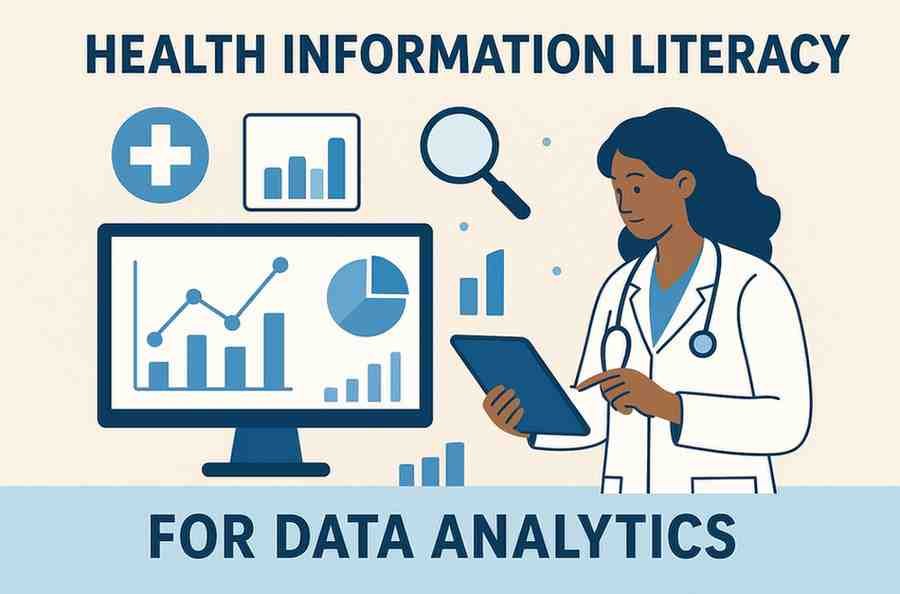
In an era where healthcare systems produce massive volumes of data every day, health information literacy has emerged as a critical skill for data professionals. Whether you’re working in health informatics, public health, analytics, or clinical operations, the ability to understand, interpret, and use health information effectively can significantly enhance the accuracy and impact of your data-driven decisions.
This review explores the importance of health information literacy, what learners gain from mastering it, and why it is becoming essential for anyone pursuing a career in health data analytics.
What Is Health Information Literacy?
Health information literacy refers to the capacity to locate, evaluate, understand, and utilize health-related information. It overlaps with traditional data literacy but adds unique healthcare-specific requirements such as understanding:
-
Medical terminology
-
Clinical workflows
-
Healthcare data formats
-
Electronic health records (EHR)
-
Privacy and compliance frameworks like HIPAA
-
Public health reporting systems
-
Patient-centered communication and data interpretation
For data analysts, this literacy empowers them to work more effectively with healthcare datasets, reduce misinterpretation, and create insights that lead to better patient and organizational outcomes.
Why Health Information Literacy Matters for Data Analytics
1. Accurate Interpretation of Clinical Data
Healthcare datasets are complex, involving diagnosis codes, lab values, vitals, prescriptions, and more. Without proper literacy, analysts risk incorrect conclusions that could harm patient outcomes or lead to flawed business decisions.
2. Better Collaboration with Medical Teams
Data analysts who understand healthcare terminology and workflows communicate more effectively with doctors, nurses, administrators, and health IT teams.
3. High Demand in Healthcare Analytics
Digital health initiatives, telemedicine, predictive analytics, and AI-driven healthcare solutions heavily rely on professionals with both analytical and domain knowledge.
4. Reduced Compliance and Security Risks
Understanding privacy laws and data governance is crucial for anyone working with sensitive medical data.
Key Skills Gained Through Health Information Literacy Training
✔ Understanding Healthcare Data Sources
Learners become familiar with the systems that generate clinical data such as EHRs, claims databases, registries, and wearable devices.
✔ Medical & Clinical Terminology
The training ensures analysts understand diagnostic codes (ICD), procedure codes (CPT), medication vocabularies (RxNorm), and clinical notes.
✔ Data Quality Evaluation
Healthcare data often contains:
-
Missing values
-
Inconsistencies
-
Human-entered errors
-
Unstructured clinical text
Health information literacy equips analysts with the ability to spot issues early and enhance data reliability.
✔ Privacy, Ethics & Regulatory Knowledge
Understanding frameworks like HIPAA, HL7, FHIR, GDPR, and informed consent is essential for compliant data handling.
✔ Analytical Thinking in Health Contexts
Analysts learn how to frame questions, assess risk, and interpret findings through the lens of patient safety and clinical relevance.
Who Should Learn Health Information Literacy?
This skill is invaluable for:
-
Aspiring health data analysts
-
Healthcare IT professionals
-
Public health analysts
-
Clinical researchers
-
Business intelligence specialists
-
AI and ML developers working in healthcare
-
Policy analysts and healthcare administrators
As the healthcare sector increasingly adopts predictive analytics and AI, domain literacy gives professionals a major competitive edge.
Benefits of Developing Health Information Literacy
1. Higher Data Accuracy
Better interpretation of clinical variables leads to higher-quality analytics.
2. Improved Patient Outcomes
Insights become more aligned with clinical goals and safety standards.
3. Stronger Analytical Stories
Reports and dashboards become more meaningful to stakeholders.
4. Career Growth & Specialization
Healthcare analytics is one of the fastest-growing sectors, offering roles like:
-
Healthcare Data Scientist
-
Clinical Data Analyst
-
Health Informatics Specialist
-
Population Health Analyst
5. Capability to Work with Emerging Health Tech
Understanding FHIR APIs, digital health platforms, and AI-powered clinical tools requires domain literacy.
Final Verdict: A Must-Have Skill for Healthcare Data Professionals
Health information literacy is no longer optional—it’s a core requirement for anyone working with healthcare data. By mastering clinical terminology, understanding health data systems, and applying ethical and regulatory standards, analysts can elevate their work from simple reporting to meaningful insights that support patient care and operational excellence.
If you’re planning to grow your career in health data analytics, acquiring strong health information literacy is one of the smartest and most future-proof steps you can take.



Reviews
There are no reviews yet.