



Description
As organizations move aggressively toward cloud-first data strategies, data engineering on Microsoft Azure has become one of the most in-demand skills in the analytics ecosystem. Tools like Azure Data Factory (ADF) and Microsoft Fabric now sit at the core of modern data platforms, powering ingestion, transformation, orchestration, and analytics at scale.
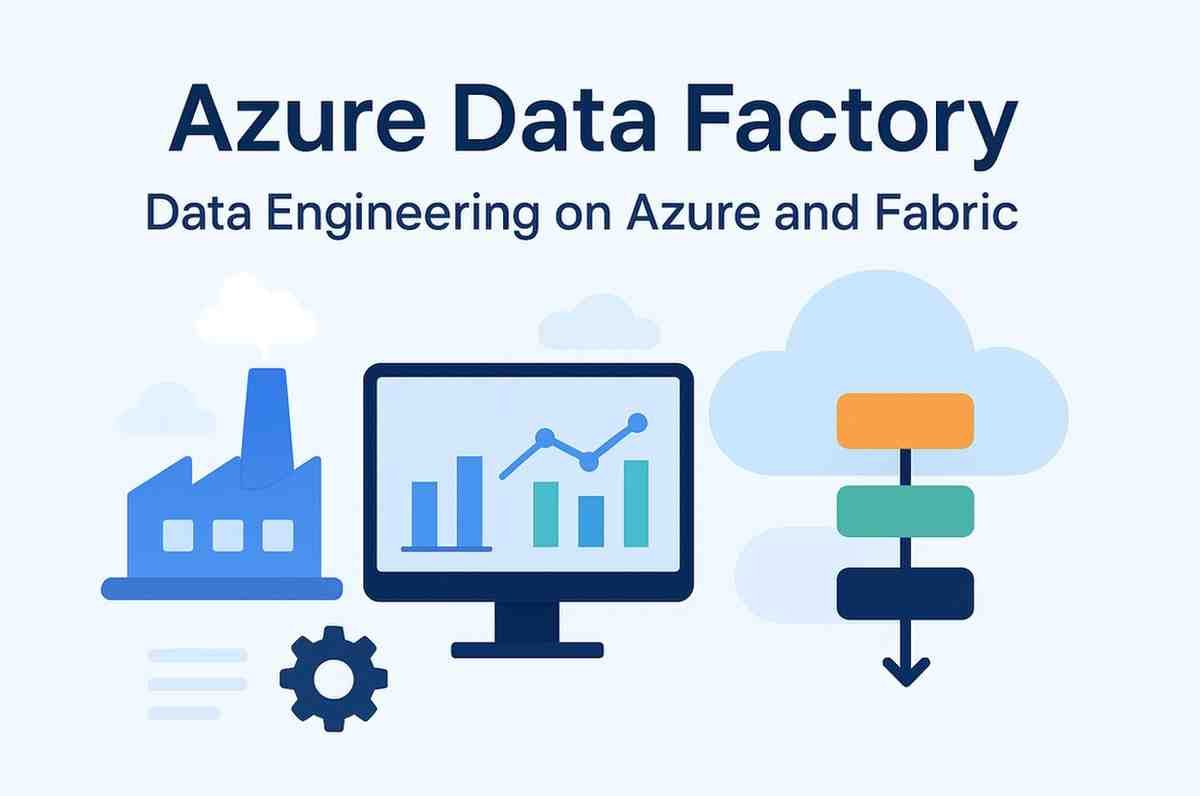
Azure Data Factory | Data Engineering on Azure and Fabric is a Udemy course designed to help learners build production-ready data pipelines using Azure-native services. This course is especially relevant for professionals aiming to work with real-world enterprise data architectures rather than toy examples.
This detailed review examines what the course covers, how practical it is, who should take it, and whether it delivers real career value.
Course Overview
This course focuses on end-to-end data engineering pipelines using Azure Data Factory, while also covering integration with Azure Synapse, Azure Data Lake, SQL-based systems, and Microsoft Fabric.
The overall learning objective is to help students:
-
Understand how data moves across cloud systems
-
Design scalable data pipelines
-
Automate ingestion and transformation
-
Operate within enterprise-grade Azure environments
Instead of isolated feature demos, the course follows a pipeline-centric approach, mirroring how data engineering works in production.
What You Will Learn in This Course
1. Data Engineering Foundations on Azure
The course begins by establishing a strong foundation in Azure-based data engineering.
You will learn:
-
Core concepts of data engineering vs analytics
-
Modern data architecture patterns
-
Role of Azure Data Factory in data platforms
-
How Azure services interact in real projects
This section is especially useful for learners transitioning from BI or traditional ETL backgrounds.
2. Azure Data Factory Core Concepts
ADF is the central focus of the course.
Topics include:
-
Azure Data Factory architecture
-
Pipelines, activities, datasets, and linked services
-
Integration Runtime concepts
-
Control flow vs data flow
-
Secure connectivity to data sources
Concepts are introduced gradually, ensuring learners understand both how and why pipelines are built.
3. Building Data Ingestion Pipelines
One of the strongest aspects of the course is its hands-on pipeline development.
You’ll learn how to:
-
Ingest data from multiple sources
-
Connect on-premise and cloud-based systems
-
Load data into Azure Data Lake and databases
-
Schedule and automate pipelines
-
Handle incremental and full data loads
These skills directly reflect common enterprise data engineering tasks.
4. Data Transformation Using Data Flows
Beyond data movement, the course dives into transformation logic.
Covered topics include:
-
Mapping Data Flows in Azure Data Factory
-
Schema drift handling
-
Column transformations and derived logic
-
Aggregations, joins, and filters
-
Performance considerations for transformations
This empowers learners to build ETL/ELT pipelines without relying solely on external tools.
5. Orchestration & Pipeline Control
Modern data pipelines require orchestration and monitoring.
You will learn:
-
Dependency management between activities
-
Parameterized pipelines
-
Dynamic content and expressions
-
Error handling and retry logic
-
Pipeline branching and looping
These features are critical for building resilient, enterprise-ready workflows.
6. Integration with Azure Synapse & Data Lake
The course explains how ADF fits into broader Azure analytics ecosystems.
You’ll explore:
-
Azure Data Lake Gen2 integrations
-
Loading data into Azure Synapse Analytics
-
Data warehouse ingestion strategies
-
Optimizing data storage for analytics
This section bridges the gap between data engineering and analytics platforms.
7. Microsoft Fabric & Modern Data Stack Context
A valuable highlight is exposure to Microsoft Fabric, which represents the future of Microsoft’s analytics ecosystem.
Learners gain:
-
Understanding of Fabric’s role in modern data platforms
-
How ADF pipelines integrate with Fabric environments
-
End-to-end data flow from ingestion to analytics
This forward-looking coverage makes the course future-proof for evolving Azure roles.
8. Monitoring, Optimization & Best Practices
The course also addresses operational excellence.
You will learn:
-
Monitoring pipeline execution
-
Performance tuning strategies
-
Cost optimization practices
-
Logging and troubleshooting failures
-
Designing scalable data architectures
These lessons are essential for real-world production systems.
Teaching Style & Learning Experience
The teaching approach is:
-
Practical and scenario-driven
-
Focused on real enterprise use cases
-
Step-by-step with clear explanations
-
Balanced between theory and implementation
The course avoids unnecessary theory and instead emphasizes doing things the right way in Azure.
Pros and Cons
✅ Pros
-
Strong real-world focus on Azure Data Factory
-
Clear explanation of enterprise data pipelines
-
Covers ingestion, transformation, and orchestration
-
Integrates Azure Synapse and Data Lake concepts
-
Includes Microsoft Fabric context
-
Suitable for job-oriented learning
❌ Cons
-
Requires basic understanding of data concepts
-
Not centered on Spark or Databricks
-
Azure interface changes may evolve over time
-
Limited focus on non-Microsoft tools
Who Should Take This Course?
This course is ideal for:
-
Aspiring data engineers
-
BI professionals moving into cloud engineering
-
Azure developers and architects
-
ETL developers transitioning to cloud platforms
-
Professionals targeting Azure data roles
Who Should Avoid This Course?
You may want to skip or delay if:
-
You are completely new to data concepts
-
You want deep Spark or PySpark coverage
-
You are focused on AWS or Google Cloud
-
You prefer purely theoretical learning
Skills You Will Gain After Completion
By the end of this course, learners can:
-
Design and build Azure Data Factory pipelines
-
Implement cloud-based ETL/ELT workflows
-
Orchestrate and monitor enterprise data jobs
-
Integrate Azure Data Lake and Synapse
-
Understand modern Microsoft Fabric data flows
These skills are directly applicable to real-world Azure data engineering roles.
Is This Course Worth It?
For learners serious about building a career in Azure data engineering, this course delivers strong practical value. It focuses on tools, patterns, and workflows actually used in enterprise environments rather than isolated demos.
If your goal is to confidently design and operate data pipelines on Azure, this course is a solid investment.
Summary
Azure Data Factory | Data Engineering on Azure and Fabric is a structured, hands-on, and job-relevant course. It equips learners with the practical knowledge required to design scalable data pipelines using Microsoft’s modern cloud analytics stack.
For professionals targeting Azure-centric data engineering roles, this course provides a dependable and future-ready learning path.

Reviews
There are no reviews yet.