



Description
Artificial Intelligence (AI) has transitioned from a futuristic concept to a fundamental technology powering industries across the globe. Whether it is search engines, self-driving cars, recommendation systems, chatbots, fraud detection, or medical diagnostics — AI is behind every modern innovation.
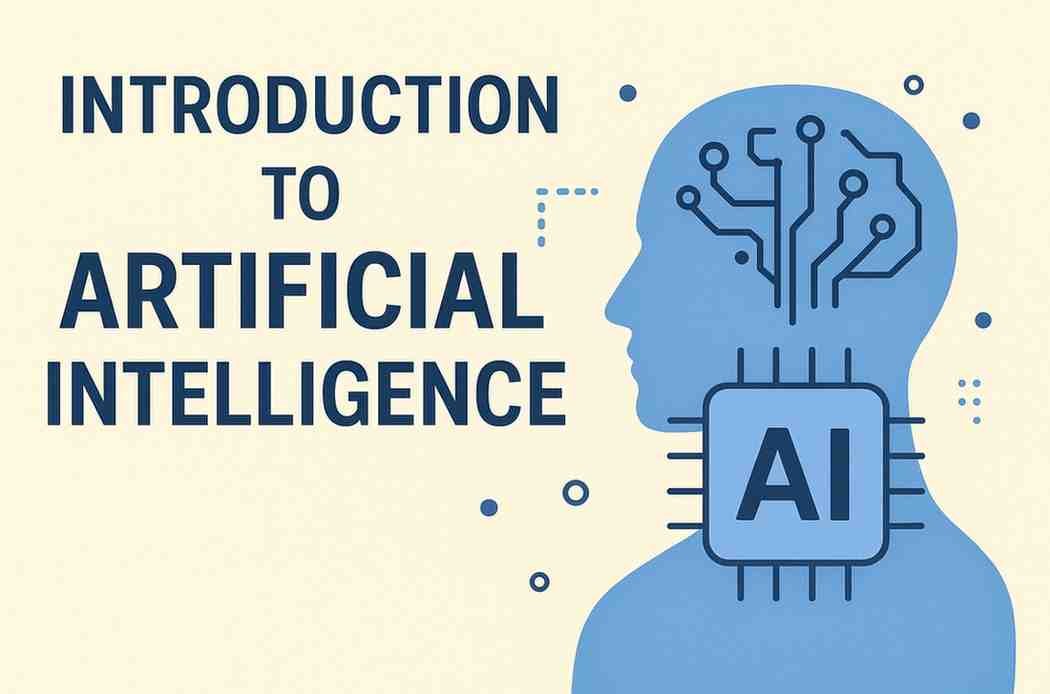
The “Introduction to Artificial Intelligence (AI)” course (commonly offered on platforms like Coursera, edX, and Microsoft Learn in various formats) is designed to give learners a foundational understanding of AI concepts, applications, and ethical considerations. It serves as a perfect entry point for beginners with no technical background and is a strong stepping stone for students pursuing machine learning, data science, automation, or robotics.
This review covers course content, real value, learning experience, strengths, weaknesses, and whether it is worth taking in 2025.
⭐ What Is the “Introduction to Artificial Intelligence (AI)” Course?
This course introduces:
-
What AI is and how it works
-
Different branches of AI
-
Machine learning fundamentals
-
Computer vision and NLP
-
Real-world AI applications
-
Ethical challenges and responsible AI
The course typically combines theory with real examples but does not dive deep into programming, making it accessible to everyone — students, professionals, managers, and even non-tech learners.
📘 Course Content Overview
Although different platforms structure modules differently, the core topics remain similar. Below is an in-depth breakdown of the typical curriculum.
1. What is Artificial Intelligence?
The course begins with:
-
Definition and evolution of AI
-
AI vs. Automation
-
Weak AI vs. Strong AI
-
Machine intelligence vs. human intelligence
This module gives learners clarity on what AI really is — beyond the hype.
2. Branches of AI
The course covers the major branches of AI:
-
Machine Learning (ML)
-
Deep Learning (DL)
-
Computer Vision (CV)
-
Natural Language Processing (NLP)
-
Expert Systems
-
Robotics
Each topic is explained using real industry examples, helping beginners visualize how AI is applied in daily life.
3. Machine Learning Basics
This is the most crucial module, where learners understand:
-
How machines “learn” from data
-
Supervised, Unsupervised, and Reinforcement learning
-
Examples: classification, regression, clustering
-
Common algorithms (at a conceptual level)
No coding is required, but conceptual clarity is strongly emphasized.
4. Deep Learning Fundamentals
This section introduces:
-
Neural networks
-
How they mimic the human brain
-
Applications like speech recognition, image processing, and chatbots
Complex concepts are simplified, making this ideal for non-technical learners.
5. AI Applications in the Real World
The course showcases AI use cases across industries:
-
Healthcare (diagnostics, drug discovery)
-
Banking (fraud detection, credit scoring)
-
E-commerce (recommendation engines)
-
Autonomous driving
-
Smart cities
-
Finance and stock market
-
Manufacturing automation
These examples help learners understand the economic and societal importance of AI.
6. Natural Language Processing (NLP)
This module focuses on:
-
How machines understand human language
-
Chatbots and virtual assistants
-
Sentiment analysis
-
Text generation (e.g., AI writing tools)
Practical examples make the concepts relatable.
7. Computer Vision (CV)
CV is explored through:
-
Image recognition
-
Object detection
-
Facial recognition
-
Medical imaging
Even without coding, learners understand how these systems work behind the scenes.
8. AI Ethics and Responsible AI
One of the strongest parts of the course is its focus on responsible AI:
-
Data privacy
-
Algorithmic bias
-
Fairness and transparency
-
AI in governance
-
Ethical risks of automation
-
Regulations and AI laws
With AI adoption growing globally, this module is highly relevant.
9. Future of AI
The course concludes with:
-
Current trends
-
AI and job market transformation
-
Limitations of AI
-
The role of humans in an AI-powered world
It provides a balanced view — neither overhyping nor downplaying AI’s impact.
🎓 Learning Experience
✔ Beginner-Friendly Language
The course is designed for learners with zero technical background. Topics are explained visually and conceptually.
✔ Real Case Studies
Examples from Netflix, Google, Tesla, Amazon, healthcare, and finance make learning practical.
✔ Short Quizzes & Assessments
Frequent quizzes help reinforce learning.
✔ Optional Hands-On Labs (Platform Dependent)
Some versions include basic tools like:
-
Azure AI Services
-
IBM Watson demos
-
Image classification mini-labs
-
No-code ML experiments
✔ Smooth Visual Learning
Animations, diagrams, and scenario videos help simplify complex concepts.
👍 Strengths
1. Perfect for Beginners
Simple, clean explanations without math-heavy formulas or programming.
2. Covers All Essential Concepts
Learners gain a complete understanding of foundational AI.
3. Real-World Applications
Makes AI relatable and practical.
4. Ethical and Responsible AI Coverage
A rare and valuable addition.
5. Short Yet Impactful
Most programs take 6–10 hours to complete.
6. Recognized globally
Especially if taken via Microsoft, IBM, or top universities.
👎 Weaknesses
1. No or Limited Coding Exposure
You won’t learn ML, Python, or AI implementation.
2. Not Suitable for Becoming a Developer
This course is theoretical and introductory.
3. Limited Depth
Great for understanding AI, but not enough for advanced roles.
4. Requires Additional Courses for ML or Data Science Careers
It cannot make you job-ready alone.
🧑💼 Who Should Take This Course?
This course is ideal for:
-
Students exploring AI
-
Business professionals needing AI literacy
-
Managers & team leads working with data teams
-
Beginners preparing for AI, ML, or Data Science careers
-
Non-technical professionals who want to understand AI concepts
-
Professionals exploring AI adoption in their domain
Not ideal for:
-
Developers who want to build ML models
-
Learners looking for hands-on Python or deep learning coding
-
Those expecting project-heavy coursework
💼 Career Relevance
After completing this course, learners can confidently:
-
Understand AI concepts
-
Participate in AI discussions in the workplace
-
Contribute to data strategy conversations
-
Choose the right specialization (ML, DL, NLP, Computer Vision)
-
Begin learning machine learning or Python
It’s an excellent stepping stone for careers such as:
-
Data Analyst
-
ML Engineer (with further study)
-
AI Product Manager
-
BI Analyst
-
Automation Specialist
-
AI Consultant
⭐ Is “Introduction to Artificial Intelligence (AI)” Worth It?
Yes — absolutely.
For anyone new to AI, this course provides:
-
Strong conceptual foundation
-
Clear explanations
-
Real-world industry examples
-
Ethical understanding
-
Knowledge of AI technologies without overwhelming complexity
It’s not a technical or coding-heavy course — but that’s exactly why it’s perfect for beginners, managers, decision-makers, and students starting their AI journey.
If you’re planning to advance into machine learning, data science, deep learning, or GenAI development, this course gives you the perfect foundation to build upon.