


Description
Introduction – Why This Course Matters in Today’s Web Design World
Learning web design today is not just about creativity; it is about mastering tools, understanding user experience, and knowing how to turn skills into real income. Many learners struggle with scattered tutorials, incomplete learning paths, and confusion between design and development. That is where “Complete Web Design: from Figma to Webflow to Freelancing” comes in.
This online course positions itself as a structured pathway for anyone who wants to learn modern web design from scratch and actually use those skills to build real-world projects. Instead of just focusing on theory, it walks through design thinking, interface creation, responsive building, and freelancing fundamentals in one journey. For learners who want to understand how ideas move from concept to live website, this course is highly relevant.
About the Course – A Clear Overview in Simple Terms
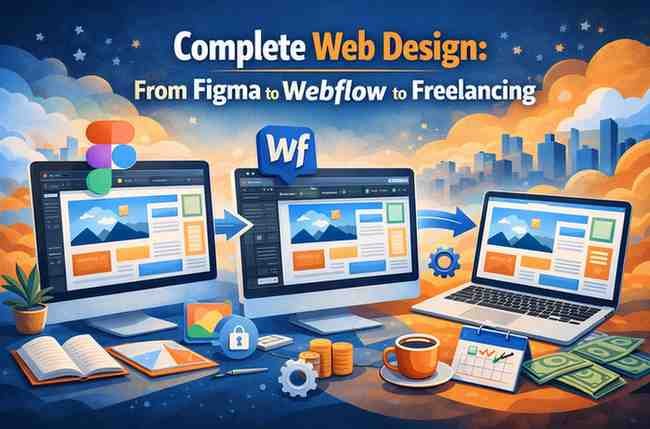
This course is built around a practical learning approach. It does not treat web design as just “drawing nice screens.” Instead, it connects the entire process:
-
How websites are planned
-
How designs are crafted in Figma
-
How they are converted into functional websites in Webflow
-
And how learners can use these skills professionally
Rather than overwhelming learners with too much jargon, the course gradually introduces essential concepts like layout grids, visual hierarchy, responsive behavior, and content flow. At the same time, it also focuses on execution using industry-relevant tools.
One important highlight is that the course does not end with building designs. It extends to freelancing guidance, helping learners understand pricing, clients, portfolios, and professional workflow. This makes it suitable not only for learners but also for those who want a career shift or want to start freelancing.
Course Modules & What You Learn
The learning content follows a logical structure, taking learners step-by-step from beginners to confident designers.
Key Learning Areas Include:
✔ Understanding Web Design Foundations
Learners get clarity on what web design truly means, including:
-
Basic UI and UX principles
-
Website structure
-
Design psychology
-
How users interact with web pages
This helps in building designs that are not just visually appealing but also practical and user-friendly.
✔ Designing in Figma
The course spends solid time explaining Figma, one of the most popular design tools today. Learners get hands-on understanding of:
-
Frames and layouts
-
Components
-
Typography systems
-
Color and spacing consistency
-
Creating complete website designs
By the end of this section, learners feel comfortable designing structured layouts and clean interfaces.
✔ Building Websites in Webflow
Once designs are ready, the course moves toward turning those designs into functional websites. Learners understand:
-
Webflow environment
-
Responsive website building
-
Animations and interactions
-
Publishing and hosting
This bridges the gap between design and development, a skill many designers lack.
✔ Freelancing & Professional Growth
Instead of stopping at technical learning, the course adds real-world business learning:
-
How to present work professionally
-
Portfolio building tips
-
Freelancing best practices
-
Basic client communication approach
This helps learners transform skills into opportunities.
Who Should Take This Course?
This online course is suitable for a wide spectrum of learners, especially:
-
Beginners who want structured guidance instead of random tutorials
-
Aspiring web designers who want to use Figma and Webflow professionally
-
Graphic designers who want to transition into modern web design
-
Freelancers aiming to expand their skill set
-
Students or job seekers looking to build a portfolio and practical capabilities
-
Entrepreneurs or creators wanting to design their own websites professionally
Whether you are just starting your learning journey or looking to make your skills industry-ready, this course fits well.
Instructor Review – Credibility & Expertise
The course reflects experience, clarity, and an understanding of real industry workflows. The teaching approach shows familiarity with client expectations, modern design standards, and professional project execution.
Instead of simply demonstrating tools, the instructor focuses on:
-
Why things are designed a certain way
-
How small decisions impact user experience
-
How to think like a professional web designer
This mindset-driven teaching is valuable, especially for learners who want to grow beyond basic design skills.
Learning Experience & Teaching Style
The learning journey feels structured, clear, and progressive. Concepts are not rushed. Each idea builds on the previous one, making it easier to absorb even if the learner does not have prior experience. The explanations are conversational, practical, and relatable.
The course offers:
-
Step-by-step walkthroughs
-
Real examples
-
Practical exercises
-
Clear explanations without technical overwhelm
This makes it engaging while staying professional. The pacing also strikes a good balance between depth and simplicity.
Pros & Benefits of This Course
Major Advantages:
-
Covers design + development + freelancing in one path
-
Teaches using modern and in-demand tools
-
Focuses on real-world web design principles
-
Beginner-friendly yet valuable for intermediate learners
-
Encourages portfolio and professional growth
-
Structured learning path instead of scattered topics
-
Clear explanations and practical guidance
For anyone searching for the best course for beginners and intermediate learners, this one stands out because it addresses skills that are directly useful in real projects.
Limitations or Things to Know
No online course is perfect, and having realistic expectations helps learners get the best value.
A few balanced considerations:
-
Learners need consistent practice; the course alone is not enough without effort
-
Webflow learning may feel overwhelming initially for complete beginners
-
Freelancing success still depends on individual effort, networking, and consistency
-
Those expecting only coding-based web development may not find it suitable, as it focuses heavily on design and Webflow
These are not drawbacks, but practical points to understand before enrolling.
Real Value & Practical Use Cases
What makes this course meaningful is its practical application. After completing it, learners can confidently:
-
Design professional websites in Figma
-
Convert designs into live Webflow websites
-
Build responsive, visually consistent web layouts
-
Create portfolio-worthy projects
-
Start freelancing or take web design jobs
-
Understand client expectations and workflows
This makes the course genuinely useful for real-world scenarios, not just theoretical learning.
Is “Complete Web Design: from Figma to Webflow to Freelancing” Worth It?
When evaluating whether an online course is worth it, the real question is:
Does it build real, usable skills?
In this case, yes. This course goes beyond shallow tutorials and focuses on structured learning, practical execution, and career relevance. It helps beginners and intermediate learners gain clarity, confidence, and direction in the world of modern web design.
If you are searching for an online course review that helps you decide, the honest conclusion is that this course offers strong learning value, especially if your goal is to learn web design systematically and eventually use it professionally. It is particularly helpful for learners asking,
“Is Complete Web Design: from Figma to Webflow to Freelancing worth it?”
For most learners interested in design and freelancing, it absolutely delivers meaningful learning.
Summary
Web design is constantly evolving, and structured learning can save months of confusion. Complete Web Design: from Figma to Webflow to Freelancing provides a comprehensive pathway from understanding design fundamentals to building functional websites and exploring freelancing opportunities.
With its balanced mix of theory, tools, and professional guidance, it stands as a strong choice for learners who want skills that matter in the real world. If your goal is to move from curiosity to capability in web design, this course offers a reliable learning journey.
If you want, I can also help you with meta description, SEO title, FAQs section, or schema-friendly Q&A to further strengthen the article’s SEO performance.

Reviews
There are no reviews yet.