



Description
Python has become the backbone of modern data science and machine learning. Its simplicity, rich ecosystem, and strong community support make it the first choice for analysts, data scientists, and AI engineers across industries. However, learning Python alone is not enough—you need structured training that bridges programming, data analysis, visualization, and machine learning into a single, usable skill set.
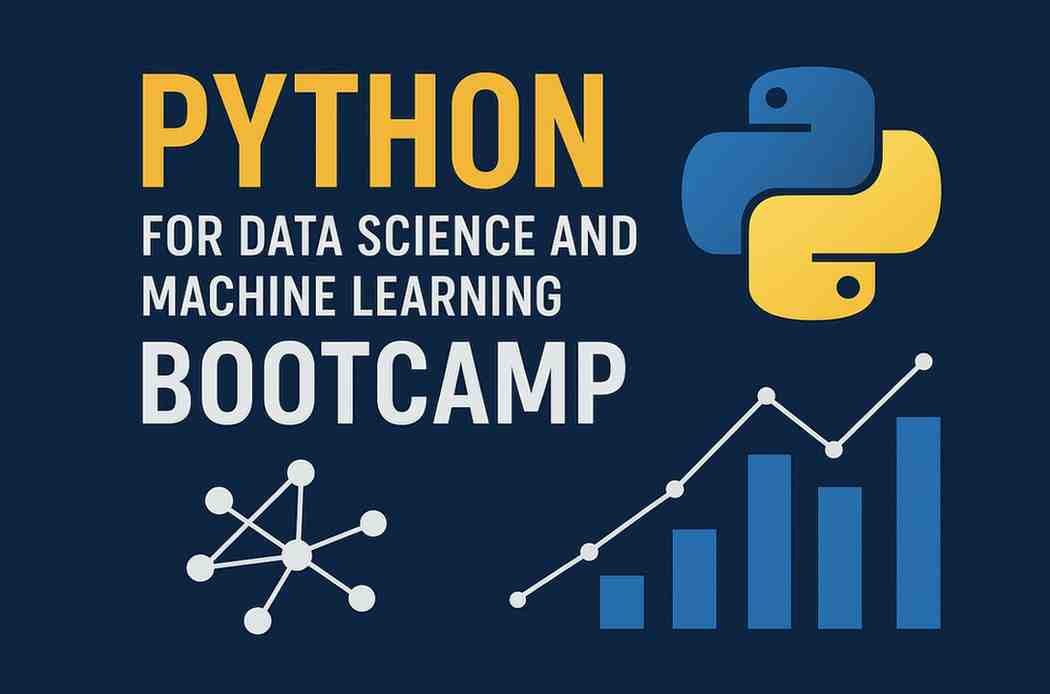
Python for Data Science and Machine Learning Bootcamp is one of the most popular Udemy courses designed to provide this complete learning path. It takes learners from Python fundamentals to applied machine learning using industry-standard libraries, making it a strong option for career-oriented students.
This in-depth review explains what the course covers, how practical it is, and whether it is worth your time and investment.
Course Overview
The course is structured as a hands-on bootcamp covering Python programming, data analysis, data visualization, and machine learning in one continuous learning journey. Instead of treating these areas separately, the curriculum focuses on how they work together in real data science workflows.
The core goal of the course is to:
-
Build strong Python fundamentals
-
Use Python for data manipulation and analysis
-
Visualize complex datasets clearly
-
Apply machine learning algorithms confidently
By the end, learners are expected to have the skill set required for entry-level data science and ML roles.
What You Will Learn in This Course
1. Python Programming Fundamentals
The course starts with a solid introduction to Python.
You will learn:
-
Python syntax and core concepts
-
Data types and variables
-
Conditional logic and loops
-
Functions and scripting fundamentals
This section ensures that beginners are comfortable before moving into data-focused topics.
2. Numerical Computing with NumPy
Numerical processing is essential for data science, and NumPy forms the foundation.
Topics covered include:
-
Arrays and vectorized operations
-
Indexing and slicing techniques
-
Mathematical and statistical functions
-
Performance advantages of NumPy
This module builds the groundwork for efficient data processing.
3. Data Analysis with Pandas
Pandas is at the heart of practical data science.
The course teaches:
-
Series and DataFrame operations
-
Data cleaning and preprocessing
-
Handling missing values
-
Filtering, grouping, and aggregation
-
Working with real datasets
This section is especially useful for learners targeting analyst or data science roles.
4. Data Visualization
Communicating insights clearly is just as important as analysis.
You will learn:
-
Plotting with Matplotlib
-
Advanced visualizations using Seaborn
-
Choosing the right chart types
-
Interpreting visual patterns
The emphasis is on making data understandable, not just visually appealing.
5. Exploratory Data Analysis (EDA)
Before modeling, understanding the data is critical.
The course covers:
-
Exploratory analysis techniques
-
Identifying trends and outliers
-
Feature relationships and correlations
-
Preparing data for machine learning
This mirrors how real data science projects begin.
6. Machine Learning Fundamentals
The transition into machine learning is smooth and well-structured.
You will learn:
-
What machine learning is and when to use it
-
Supervised vs unsupervised learning
-
Training and testing data splits
-
Model evaluation techniques
This ensures learners understand how and why algorithms work.
7. Supervised Learning Algorithms
The course includes practical implementations of common ML models.
Covered algorithms include:
-
Linear and logistic regression
-
K-Nearest Neighbors
-
Decision trees and random forests
-
Support Vector Machines
Models are explained conceptually and implemented step by step.
8. Unsupervised Learning Techniques
Unsupervised learning is also addressed clearly.
You will learn:
-
K-Means clustering
-
Hierarchical clustering concepts
-
Dimensionality reduction basics
-
Extracting insights from unlabeled data
These topics broaden the learner’s analytical toolkit.
9. Model Evaluation & Improvement
Building accurate models requires proper evaluation.
The course teaches:
-
Confusion matrices
-
Classification and regression metrics
-
Bias-variance tradeoff
-
Improving model performance
This helps learners avoid common beginner mistakes.
Teaching Style & Learning Experience
The teaching approach is:
-
Beginner-friendly yet comprehensive
-
Code-first and example-driven
-
Step-by-step explanations
-
Focused on practical use rather than theory overload
The bootcamp format allows learners to make consistent progress without feeling overwhelmed.
Pros and Cons
✅ Pros
-
Complete beginner-to-intermediate learning path
-
Strong focus on practical Python usage
-
Covers both data science and machine learning
-
Uses industry-standard Python libraries
-
Well-structured and easy to follow
-
Suitable for portfolio building
❌ Cons
-
Deep learning is not the primary focus
-
Requires time commitment due to course length
-
Advanced ML topics are limited
-
Not focused on deployment or MLOps
Who Should Take This Course?
This course is ideal for:
-
Beginners entering data science
-
Aspiring machine learning professionals
-
Analysts transitioning to Python
-
Engineering students exploring AI
-
Professionals looking to upskill in analytics
Who Should Avoid This Course?
You may want to skip or postpone this course if:
-
You already have advanced ML expertise
-
You want deep neural networks and AI research
-
You prefer short, topic-specific tutorials
-
You are only interested in deployment strategies
Skills You Will Gain After Completion
After completing this bootcamp, learners will be able to:
-
Write Python code confidently
-
Analyze and clean real-world datasets
-
Create meaningful data visualizations
-
Build and evaluate machine learning models
-
Handle end-to-end data science workflows
These skills align well with entry-level and intermediate data science job requirements.
Is Python for Data Science and Machine Learning Bootcamp Worth It?
If you are looking for a structured, practical, and beginner-friendly path into data science and machine learning, this course delivers excellent value. It emphasizes hands-on learning and real-world relevance rather than abstract theory.
For learners serious about building a foundation in Python-based data science, this bootcamp is a strong learning investment.
Summary
Python for Data Science and Machine Learning Bootcamp stands out as a comprehensive and practical course that covers the full workflow of data science using Python. Its balanced approach makes it especially valuable for learners aiming to build long-term careers in analytics, data science, or machine learning.