


Description
Communication is one of the most important skills in both professional and personal life. Whether you are speaking with a colleague, managing a team, attending an interview, presenting an idea, or handling a difficult conversation, your ability to communicate clearly can have a major impact on the outcome.
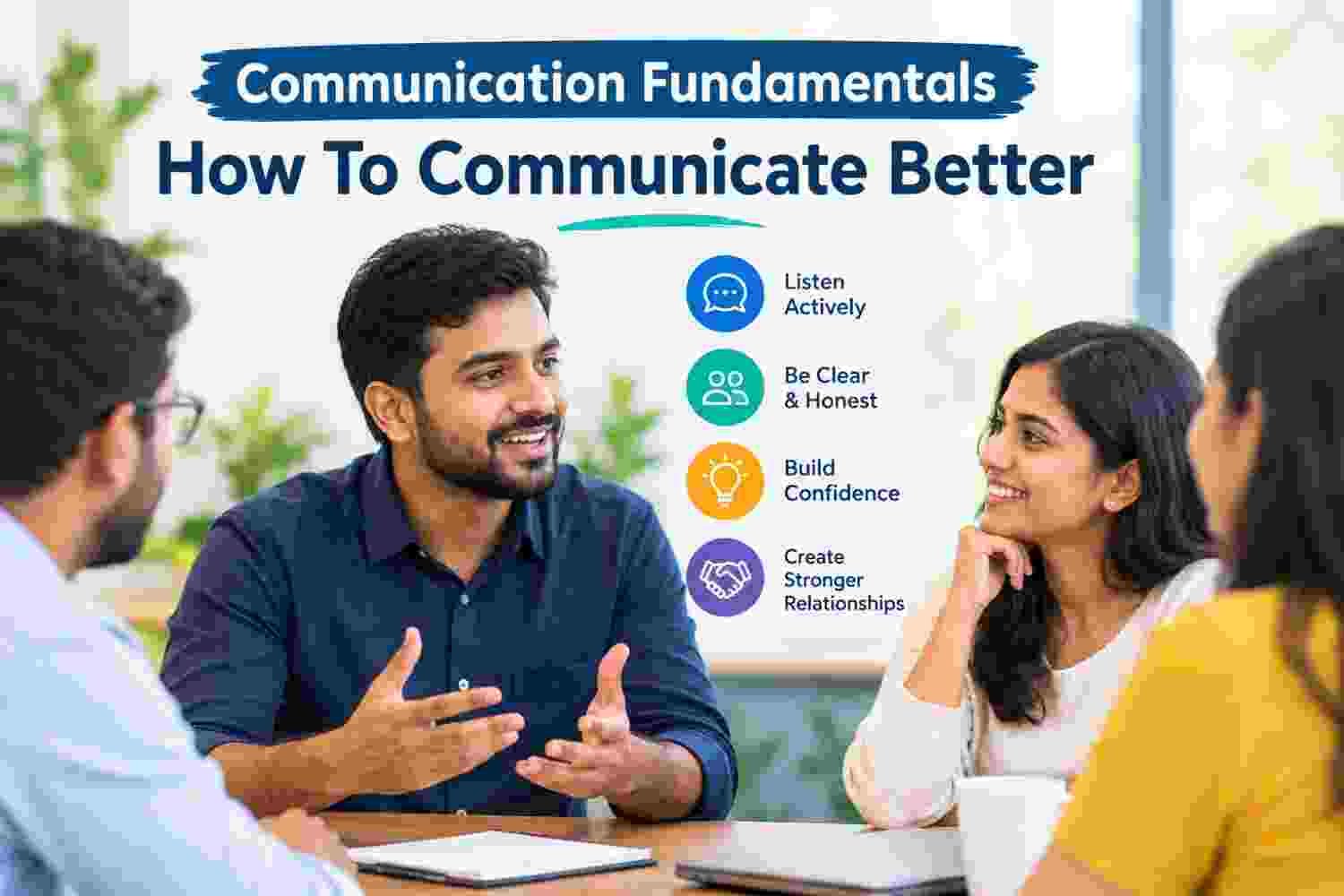
Communication Fundamentals: How To Communicate Better is a Udemy course designed to help learners improve their communication skills and become more confident, clear, and effective communicators.
Communication Fundamentals: How To Communicate Better – Overview
Communication problems are rarely caused simply by a lack of vocabulary or grammatical knowledge. Misunderstandings can occur because people don’t listen carefully, fail to communicate their expectations, use unclear language, or struggle to adapt their communication style to different situations.
This course approaches communication as a skill that can be learned and improved through awareness and practice.
What Will You Learn in Communication Fundamentals?
The course provides learners with practical concepts and techniques that can help improve the way they communicate.
Some of the major learning areas include:
- Understanding the fundamentals of effective communication
- Communicating ideas more clearly
- Becoming a better listener
- Improving interpersonal communication
- Understanding how communication can break down
- Developing greater awareness during conversations
- Communicating more confidently
- Improving workplace communication
- Handling different communication situations
- Building stronger relationships through better communication
- Avoiding common communication mistakes
- Applying communication techniques in everyday situations
The objective isn’t simply to give learners theoretical knowledge. The broader goal is to help them become more intentional about how they communicate.
Why Communication Skills Matter
Communication is involved in almost every aspect of modern professional life.
Consider a typical workplace. You may need to:
- Explain an idea to your manager
- Give instructions to a colleague
- Participate in meetings
- Write emails
- Give presentations
- Negotiate deadlines
- Resolve disagreements
- Provide feedback
- Speak with customers
- Collaborate with team members
Technical expertise alone doesn’t guarantee success in these situations.
Someone may have excellent technical knowledge but struggle to explain their ideas. Another person may have average technical knowledge but communicate exceptionally well and therefore build stronger relationships and influence decisions more effectively.
This is why communication is often considered a core soft skill.
Course Content and Learning Experience
One of the advantages of learning communication through an online course is flexibility.
You can study the lessons at your own pace and revisit topics whenever necessary.
This is particularly useful for communication because improvement doesn’t happen simply by understanding a concept once. Repetition and application are important.
A good learning approach is to watch a lesson and then consciously apply the technique during your next conversation.
For example, if the course introduces active listening, don’t stop at understanding the concept. Try using active listening techniques during a meeting or conversation and observe how the interaction changes.
Key Skill #1: Listening
One of the most overlooked parts of communication is listening.
Many people think communication is primarily about speaking. In reality, effective communication requires the ability to understand what another person is saying.
Poor listening can lead to:
- Misunderstandings
- Repeated questions
- Workplace conflicts
- Incorrect assumptions
- Frustration
- Poor decision-making
Developing stronger listening habits can therefore improve communication without requiring you to become a more talkative person.
The course helps learners understand communication from both sides of the conversation.
Key Skill #2: Speaking Clearly
Being able to communicate an idea clearly is essential.
A strong communicator doesn’t necessarily use complicated vocabulary or long explanations. Instead, they organize their thoughts and deliver the relevant information in a way that the listener can understand.
Clear communication can help you:
- Reduce misunderstandings
- Explain complex ideas
- Give better instructions
- Make presentations more effective
- Improve workplace collaboration
The principles covered in the course can be useful for developing this clarity.
Key Skill #3: Confidence
Communication confidence is another important area.
You may know exactly what you want to say but hesitate to express yourself because you’re worried about how others will react.
This can affect:
- Meetings
- Interviews
- Presentations
- Negotiations
- Networking
- Workplace discussions
- Social interactions
Developing communication confidence doesn’t mean becoming aggressive or dominating conversations. It means being able to express your thoughts clearly and appropriately.
Key Skill #4: Understanding Other People
Communication is not one-directional.
A message that seems perfectly clear to one person can be interpreted differently by another.
Effective communicators recognize that people have different experiences, expectations, communication styles, and perspectives.
Understanding this can help you adjust your communication depending on the person and situation.
For example, the way you explain a technical concept to an experienced developer may be completely different from the way you explain it to a non-technical customer.
Key Skill #5: Workplace Communication
Communication skills are especially valuable in professional environments.
Whether you’re an employee, manager, freelancer, entrepreneur, or business owner, you constantly interact with other people.
Better communication can contribute to:
- More productive meetings
- Better teamwork
- Stronger professional relationships
- More effective presentations
- Clearer expectations
- Better collaboration
- Improved conflict resolution
For professionals looking to progress in their careers, communication skills can complement technical expertise.
Who Should Take This Course?
Students
Students can benefit from developing communication skills before entering the workforce.
Better communication can help with presentations, group projects, interviews, networking, and academic discussions.
Working Professionals
This is one of the most relevant audiences for the course.
Professionals communicate constantly through meetings, emails, presentations, calls, and collaborative projects.
Improving communication can therefore have a direct impact on workplace effectiveness.
Managers and Team Leaders
Managers need strong communication skills because their responsibilities often involve explaining expectations, providing feedback, resolving conflicts, and motivating employees.
A manager who communicates poorly can create confusion even when their decisions are technically correct.
Entrepreneurs and Business Owners
Entrepreneurs frequently need to communicate with customers, employees, investors, suppliers, partners, and other stakeholders.
Clear communication can therefore become an important business advantage.
Job Seekers
Communication is also extremely valuable during the recruitment process.
Candidates need to communicate effectively during:
- Interviews
- Networking
- Presentations
- Group discussions
- Salary negotiations
Improving communication can help candidates present their experience and ideas more effectively.
People Who Struggle With Conversations
If you frequently find yourself unsure about what to say, misunderstood by others, uncomfortable during conversations, or unable to express your ideas clearly, a structured communication course can provide useful techniques to practice.
Pros of Communication Fundamentals: How To Communicate Better
1. Practical Skill
Communication is a skill that can be applied immediately.
Unlike some courses where knowledge remains theoretical, communication techniques can be practiced during your next conversation.
2. Useful for Almost Any Career
Communication is not restricted to one profession.
It can benefit:
- IT professionals
- Managers
- Teachers
- Salespeople
- Entrepreneurs
- Consultants
- Healthcare professionals
- Students
- Freelancers
- Customer-service professionals
3. Beginner-Friendly Subject
You don’t need technical knowledge or previous communication training to benefit from the course.
The concepts are relevant to everyday life.
4. Professional and Personal Benefits
Communication skills can improve both workplace interactions and personal relationships.
The same principles that help you communicate with colleagues can often help you communicate with friends and family.
5. Flexible Online Learning
Because the course is available online, learners can study according to their own schedule and revisit lessons when needed.
Potential Limitations
No communication course can instantly transform someone into an exceptional communicator.
Communication is a behavioral skill, and improvement requires practice.
Practice Is Essential
Watching lessons is only the first step.
To get meaningful results, learners should deliberately practice the techniques in real conversations.
Individual Results Can Differ
Communication challenges vary from person to person.
Someone who struggles with public speaking may need a different type of training from someone who struggles with active listening or interpersonal conflict.
Therefore, learners should identify their specific weaknesses and use the course as a foundation for improvement.
Not a Complete Public Speaking Program
If your primary goal is professional public speaking, stage performance, or advanced presentation skills, you may eventually need specialized training in those areas.
Communication is a broader subject than public speaking.
How to Get the Most From the Course
If you decide to take this course, don’t treat it like a traditional lecture-based class.
Use an active-learning approach.
Step 1: Take Notes
Write down communication techniques that you can realistically use.
Step 2: Identify Your Weaknesses
Ask yourself:
- Do I interrupt people?
- Do I listen carefully?
- Do I explain things clearly?
- Do I avoid difficult conversations?
- Do I speak too quickly?
- Do I struggle to express disagreement?
- Do people frequently misunderstand me?
Your answers can help you identify areas for improvement.
Step 3: Practice One Skill at a Time
Trying to change every communication behavior simultaneously can be difficult.
Choose one skill and practice it consistently.
Step 4: Apply the Techniques at Work
Use the techniques during meetings, calls, presentations, and one-to-one discussions.
Step 5: Review Your Progress
After conversations, think about what worked and what didn’t.
Over time, this self-reflection can help turn communication techniques into natural habits.
Is Communication Fundamentals: How To Communicate Better Worth It?
Yes, it can be a worthwhile course for anyone who wants to improve their communication skills.
Communication is a high-value transferable skill, and even modest improvements can have meaningful effects on professional interactions, teamwork, relationships, and career development.
The course is particularly appealing to beginners because communication doesn’t require specialized technical knowledge. You can start applying the concepts immediately.
However, the real value depends on how actively you practice the material.
If you watch the lessons without changing your communication habits, the impact will probably be limited. If you combine the lessons with deliberate practice and self-reflection, the course can become a useful component of your personal and professional development.
Summary
Communication Fundamentals: How To Communicate Better is a useful choice for learners who want to develop stronger communication habits and become more effective in professional and everyday interactions.
Its biggest strength is the relevance of the subject. Communication is a skill that can benefit virtually every career and almost every type of interpersonal relationship.
If you’re a student, job seeker, employee, manager, entrepreneur, freelancer, or professional who wants to communicate more clearly and confidently, this course is worth considering.