



Description
Introduction
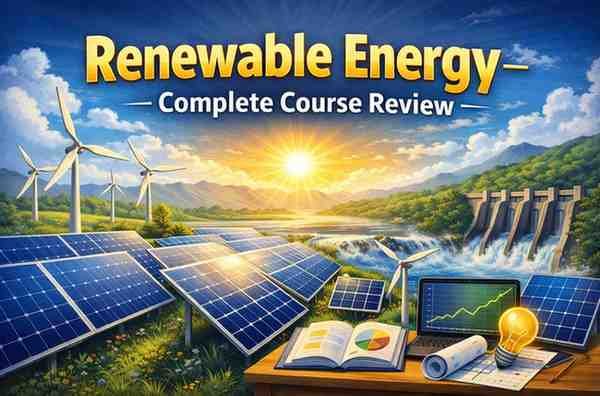
As global industries shift toward sustainable power solutions, understanding renewable energy systems has become an essential skill for students, professionals, and entrepreneurs alike. Renewable Energy is an educational course designed to introduce learners to the principles, technologies, and real-world applications of clean energy sources.
This course provides a broad yet structured overview of renewable energy technologies, helping learners understand how modern energy systems are evolving beyond fossil fuels. It combines theoretical explanations with practical insights into how renewable technologies operate and contribute to sustainable development.
This review examines the course content, teaching approach, learning outcomes, strengths, limitations, and overall value to help you determine whether it fits your learning goals.
What You Will Learn
The course focuses on building a foundational understanding of renewable energy technologies and energy sustainability concepts.
Key learning outcomes include:
-
Fundamentals of renewable energy systems
-
Global energy challenges and sustainability concepts
-
Solar energy technologies and applications
-
Wind power generation principles
-
Hydropower systems and operation
-
Biomass and bioenergy fundamentals
-
Energy efficiency and environmental impact
-
Renewable energy integration into modern power systems
The curriculum aims to provide learners with a broad understanding rather than deep engineering specialization.
Course Curriculum Breakdown
1. Introduction to Energy and Sustainability
The course begins by explaining the global energy landscape and why renewable energy is becoming increasingly important.
Topics include:
-
Traditional vs renewable energy sources
-
Environmental impacts of fossil fuels
-
Climate and sustainability considerations
-
Energy demand and future challenges
This module establishes context for understanding the need for renewable technologies.
2. Solar Energy Fundamentals
Learners are introduced to solar power generation and photovoltaic technology.
Key concepts covered:
-
Solar radiation and energy conversion
-
Photovoltaic system basics
-
Solar thermal applications
-
Advantages and limitations of solar energy
The lessons explain how sunlight is converted into usable electricity and heat.
3. Wind Energy Systems
This section explores how wind turbines generate electricity and the factors affecting performance.
Coverage includes:
-
Wind turbine components
-
Wind resource assessment
-
Energy generation principles
-
Site selection considerations
The module connects engineering concepts with real-world wind farm applications.
4. Hydropower and Water-Based Energy
Hydropower is explained as one of the most established renewable energy technologies.
Topics include:
-
Hydroelectric generation principles
-
Types of hydropower plants
-
Environmental and economic factors
-
Energy storage potential
Learners gain insight into how water flow can be converted into reliable electricity production.
5. Biomass and Alternative Renewable Sources
The course also introduces alternative renewable energy systems.
Key areas:
-
Biomass energy production
-
Biofuels and waste-to-energy concepts
-
Geothermal energy overview
-
Emerging renewable technologies
This section broadens understanding of diversified energy solutions.
6. Energy Efficiency and System Integration
A critical part of renewable energy adoption involves integrating clean energy into existing power systems.
Learners explore:
-
Energy efficiency principles
-
Grid integration challenges
-
Storage considerations
-
Future renewable energy trends
This module connects technical knowledge with real-world energy infrastructure.
Teaching Style and Learning Experience
The course follows a structured, easy-to-understand teaching approach suitable for beginners.
Key characteristics include:
-
Clear explanations without heavy mathematics
-
Concept-first learning methodology
-
Real-world examples to improve understanding
-
Logical progression between energy technologies
The pacing allows learners to gradually build knowledge even without prior engineering background.
Practical Applications Covered
The course highlights how renewable energy knowledge applies across industries, including:
-
Sustainable infrastructure planning
-
Energy consulting and policy understanding
-
Solar and wind project awareness
-
Environmental impact analysis
-
Green business and entrepreneurship opportunities
This practical orientation helps learners understand both technological and economic aspects of renewable energy.
Who This Course Is Best For
Ideal Learners
-
Beginners interested in renewable energy careers
-
Engineering and science students
-
Sustainability professionals
-
Entrepreneurs exploring clean energy businesses
-
Individuals seeking energy literacy and environmental knowledge
Not Ideal For
-
Advanced engineers seeking detailed system design calculations
-
Learners expecting deep technical simulations
-
Professionals looking for specialized certification-level training
Skills You Gain After Completion
After completing the course, learners typically develop:
-
Strong understanding of renewable energy technologies
-
Awareness of global energy transition challenges
-
Ability to compare renewable power sources
-
Knowledge of sustainability and environmental impacts
-
Foundational energy industry insight
These skills provide a solid starting point for further specialization in solar, wind, or energy engineering.
Course Strengths
✅ Comprehensive overview of major renewable technologies
✅ Beginner-friendly explanations
✅ Balanced coverage across multiple energy sources
✅ Strong focus on sustainability concepts
✅ Useful foundation for clean energy careers
Areas That Could Be Improved
-
Advanced technical design topics are limited.
-
More case studies could enhance practical understanding.
-
Hands-on calculation exercises are minimal.
Career and Learning Value
Renewable energy is one of the fastest-growing sectors globally, creating opportunities across engineering, policy, consulting, and business development.
This course supports learners interested in:
-
Renewable energy awareness and education
-
Entry-level sustainability roles
-
Clean energy entrepreneurship
-
Environmental and energy policy understanding
-
Preparation for specialized renewable energy training
Its broad coverage makes it particularly valuable as a foundational learning program.
Summary
Renewable Energy offers a clear and comprehensive introduction to sustainable power technologies and modern energy systems. The course successfully explains complex energy concepts in an accessible format, making it suitable for beginners seeking structured knowledge about clean energy solutions.
For learners wanting a strong conceptual understanding of renewable technologies and the global energy transition, this course delivers solid educational value and practical insight.