




Description
Introduction
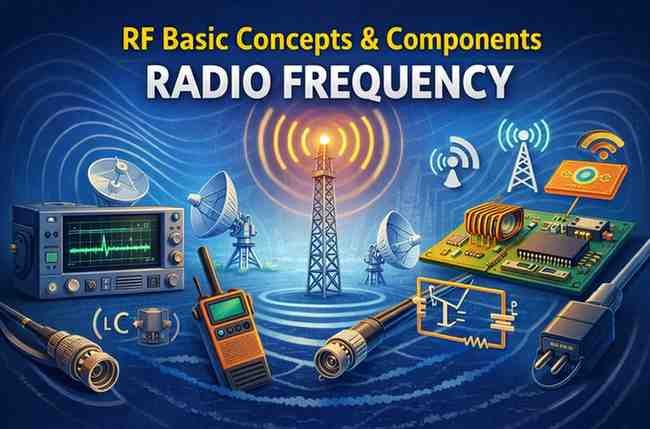
Radio Frequency (RF) technology forms the backbone of modern wireless communication systems, powering everything from mobile networks and satellite communication to radar and IoT devices. RF Basic Concepts & Components: Radio Frequency – Entry Level is designed as an introductory course that simplifies complex RF engineering principles for beginners and early-career learners.
This course focuses on building strong conceptual understanding before moving into technical applications, making it ideal for students and professionals entering the telecommunications or electronics field.
This review provides a detailed evaluation of the course structure, learning experience, skills gained, strengths, limitations, and overall value.
What You Will Learn
The course establishes a solid foundation in RF engineering concepts through structured lessons and practical explanations.
Key learning outcomes include:
-
Understanding radio frequency fundamentals
-
Frequency spectrum and electromagnetic wave behavior
-
RF signal characteristics and propagation
-
Core RF components and their functions
-
Transmission lines and impedance concepts
-
Basic antenna principles
-
Power measurement and signal parameters
-
RF system block diagrams and architecture
The content emphasizes clarity and real-world relevance rather than advanced mathematical derivations.
Course Curriculum Breakdown
1. Introduction to Radio Frequency Fundamentals
The course begins by explaining how RF technology fits into modern communication systems. Learners are introduced to electromagnetic waves, frequency ranges, and signal transmission basics.
Topics include:
-
What radio frequency means
-
Frequency bands and spectrum usage
-
RF applications in communication systems
-
Basic signal terminology
This section builds essential vocabulary required for further RF learning.
2. RF Signals and Wave Behavior
Understanding signal behavior is critical in RF engineering. The course explains how signals travel, interact with environments, and experience losses.
Key concepts covered:
-
Wavelength and frequency relationships
-
Signal attenuation
-
Reflection and propagation effects
-
Noise and interference basics
These lessons help learners visualize how wireless signals behave in real scenarios.
3. RF Components and Hardware
One of the most practical sections focuses on common RF components used in communication systems.
Learners explore:
-
Amplifiers
-
Filters
-
Mixers
-
Oscillators
-
Attenuators
-
Couplers and connectors
Each component is explained in terms of purpose, operation, and system role.
4. Transmission Lines and Impedance Matching
This module introduces essential electrical concepts that directly affect RF performance.
Coverage includes:
-
Transmission line fundamentals
-
Impedance matching concepts
-
Signal reflections
-
Standing wave ratio (SWR) basics
These ideas are crucial for anyone planning to move into RF design or testing roles.
5. Antenna Fundamentals
The course provides a beginner-friendly introduction to antennas and their importance in wireless systems.
Topics include:
-
Antenna types
-
Radiation patterns
-
Gain and efficiency
-
Basic antenna operation principles
This section connects theoretical RF concepts to real communication hardware.
Teaching Style and Learning Experience
The instructor adopts a structured and simplified teaching methodology aimed at beginners entering RF engineering.
Key teaching characteristics:
-
Clear explanations of technical terminology
-
Step-by-step conceptual development
-
Engineering concepts explained without excessive mathematics
-
Real-world examples to reinforce learning
The pacing allows learners without prior RF experience to gradually build confidence while understanding industry terminology.
Practical Applications Covered
The course connects RF theory to real-world technology, including:
-
Wireless communication systems
-
Cellular networks
-
Satellite communication
-
Radar systems
-
Internet of Things (IoT) devices
-
Broadcast transmission systems
This applied perspective helps learners understand where RF knowledge is used professionally.
Who This Course Is Best For
Ideal Learners
-
Electronics and telecommunications students
-
Beginners entering RF engineering
-
Embedded systems learners
-
Networking and wireless technology enthusiasts
-
Engineers transitioning into communication technology roles
Not Ideal For
-
Advanced RF engineers seeking deep circuit design or simulation
-
Learners expecting heavy mathematical derivations
-
Professionals looking for advanced microwave engineering topics
Skills You Gain After Completion
After completing the course, learners typically develop:
-
Strong understanding of RF fundamentals
-
Familiarity with key RF components and terminology
-
Ability to interpret RF system block diagrams
-
Basic knowledge of antenna and transmission line behavior
-
Foundation for advanced RF or wireless communication courses
These skills create a stepping stone toward specialized RF engineering training.
Course Strengths
✅ Beginner-friendly explanations of complex RF topics
✅ Strong focus on practical understanding
✅ Clear introduction to RF components and systems
✅ Logical progression from fundamentals to applications
✅ Useful preparation for telecommunications careers
Areas That Could Be Improved
-
Advanced simulations and design tools are not deeply covered.
-
Mathematical depth is intentionally limited.
-
Hands-on lab demonstrations could further enhance learning.
Career and Learning Value
RF engineering remains essential in modern technology sectors driven by wireless communication growth. This course provides foundational knowledge useful for:
-
Entry-level telecommunications roles
-
RF testing and support engineering
-
Wireless network technology careers
-
Electronics and embedded systems development
-
Preparation for advanced RF certification programs
For beginners, it offers an accessible pathway into a technically specialized field.
Summary
RF Basic Concepts & Components: Radio Frequency – Entry Level is a well-structured introductory course that simplifies RF engineering fundamentals without sacrificing technical accuracy. Its focus on conceptual clarity makes it an excellent starting point for learners who want to understand how wireless communication systems function.
For students and professionals beginning their RF journey, this course provides a strong and practical foundation that prepares learners for more advanced study and industry applications.